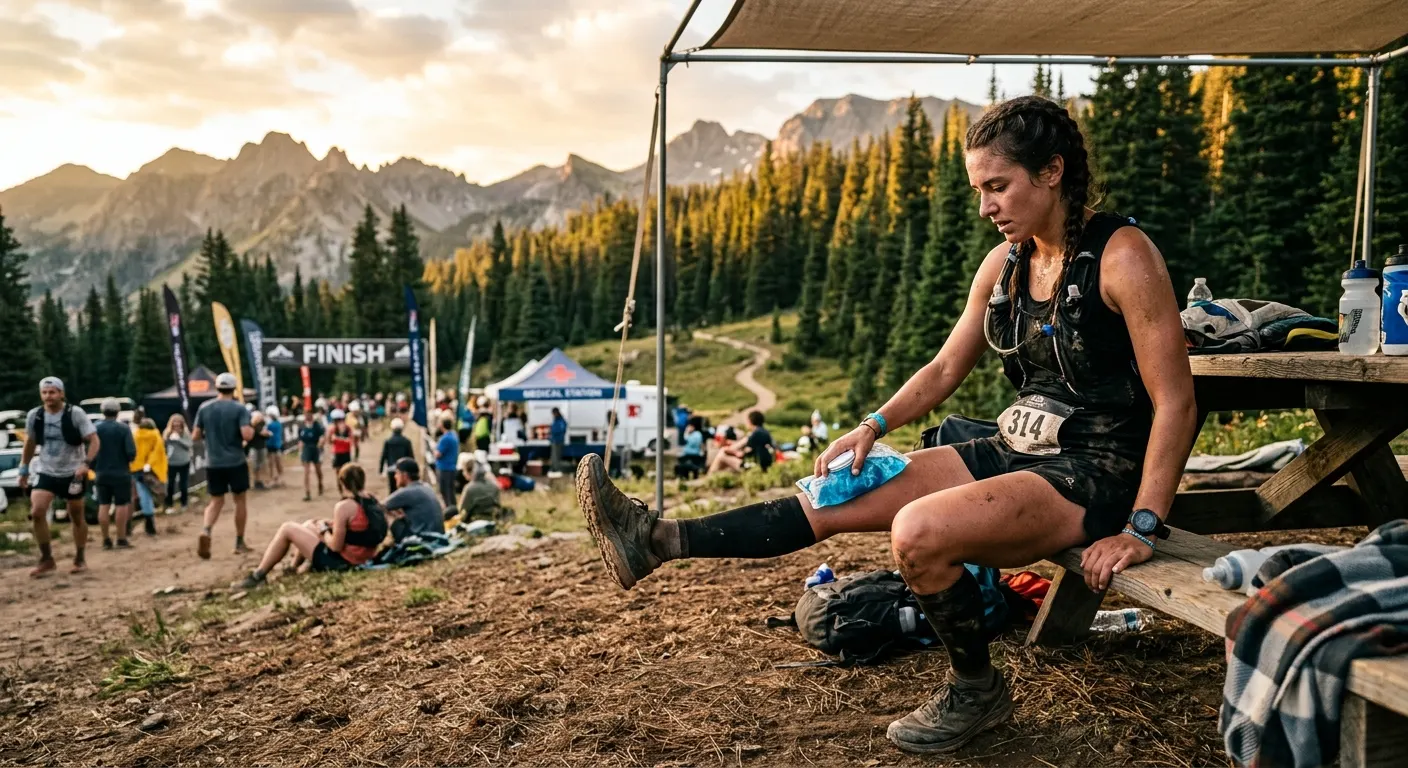
The day after a trail race is the worst-feeling day of a runner's life, regardless of the distance. DOMS (delayed onset muscle soreness) peaks at 24 to 48 hours post-race, and the damage from technical descents on a 50-mile course can leave legs that feel like someone beat them with a bat. This guide covers what recovery interventions are actually supported by evidence, which trail running community favorites have real merit, and which are worth skipping. We also address the practical role of compression socks like Darn Tough Micro Crew Trail Running Socks , anti-chafe healing, and what to eat and drink in the 24 hours after finishing.
The highest-evidence post-trail-race recovery interventions are sleep, protein intake within 30 minutes of finishing, and easy walking the day after to manage DOMS. Compression socks like Darn Tough crew height provide genuine venous return benefit for travel after a race. Percussive therapy tools reduce muscular soreness measurably. Ice baths are effective but uncomfortable; contrast therapy is an accessible alternative.
This guide contains affiliate links. TrailCadence may earn a commission at no cost to you.
The first 30 minutes: nutrition before sleep
The highest-impact single action in post-race recovery happens in the first 30 minutes after you stop: protein intake. The anabolic window for muscle protein synthesis is real and well-established. Aim for 25 to 40g of protein within 30 minutes of finishing, when your gut can still absorb it before post-race nausea or sleep interferes.
Combine with simple carbohydrates to replace glycogen. Chocolate milk has become a cliche of recovery nutrition, but the combination of casein protein, fast carbohydrates, and fluid in a single accessible product is genuinely sound. At a 100-mile finish line at 3am, chocolate milk or a protein shake is far more achievable than cooking a balanced meal.
Rehydration is secondary to protein and carbohydrate in the immediate post-race window, because electrolyte balance has usually been managed during the race and additional fluid volume without sodium can dilute what is left. Drink to thirst with something that contains salt; do not force fluid volume purely for hydration goals.
Compression socks and the travel day after a race
Running in Darn Tough Micro Crew Trail Running Socks during training and racing keeps blisters managed; wearing a full-length compression sock on the flight or drive home is a separate tool with real evidence behind it. Extended sitting after a long-distance event increases pooling of fluid in the lower legs. Graduated compression (tighter at the ankle, lighter at the calf) promotes venous return and reduces the swelling that turns a post-race travel day into a painful one.
Trail running socks like Balega Enduro Quarter Trail Running Socks and Injinji Trail Midweight Crew Toe Socks are not compression products; they are structured for moisture and blister management during running. Post-race travel compression socks are a different product category. Keep your race socks in your gear bag and change into compression socks before travel.
The Body Glide Original Anti-Chafe Balm and Squirrel's Nut Butter Anti-Chafe Salve applied to fresh chafe wounds in the 24 hours after a race reduce the pain of clothing contact on raw skin. This is not glamorous, but chafe wounds at the inner thigh and underarm that get worse with each clothing contact during travel are a real problem.

Darn Tough Micro Crew Trail Running Socks
Vermont-made merino wool trail socks with a lifetime guarantee: stays blister-free over long efforts and does not bunch or compress.

Balega Enduro Quarter Trail Running Socks
A moisture-wicking South African mohair blend sock with a DryRelease finish and a seamless toe for long distance comfort.
Body Glide Original Anti-Chafe Balm
The anti-chafe category standard: a glide-on balm stick that prevents skin friction at every contact point without greasy residue.

Squirrel's Nut Butter Anti-Chafe Salve
A thick, oil-based anti-chafe salve used by ultramarathon runners who need 12-plus hours of protection without reapplication.
Movement versus rest on day one post-race
Complete rest is worse than easy movement for DOMS. The research on delayed onset muscle soreness consistently shows that light movement (10 to 20 minute easy walks, non-impact activity) on the day after a race reduces soreness duration versus complete rest. This is counterintuitive when every step hurts, but blood flow accelerates the inflammatory clearance that causes soreness.
Do not run. Do not do anything resembling a workout. A 15-minute walk and some gentle standing hip circles are enough. The goal is circulation, not exercise stimulus. The biggest mistake post-100-mile runners make is either total sedentary rest or returning to running within 5 to 7 days; both extend recovery.
Stairs are the post-race descent test. If descending stairs is painful, your quads are still in the acute damage phase and running should wait. Most runners can return to easy running after a 50K in 5 to 7 days and after a 100-mile in 10 to 21 days depending on the individual and the technical difficulty of the course.
Sleep: the most underrated recovery tool
Sleep is where muscle protein synthesis, HGH release, and glycogen restoration actually happen. No compression tool, no gel, and no ice bath replaces 9 to 10 hours of sleep for three consecutive nights post-race.
The irony is that post-race sleep is often disrupted by pain, DOMS, and the adrenaline hangover that follows a major effort. Blackout curtains, a cooler room temperature (65 to 68F promotes sleep onset), and avoiding screens in the hour before bed are practical sleep hygiene measures that improve post-race recovery quality more than any product.
Race-day and night-of finish sleep is often only 2 to 4 hours on a 100-mile. The recovery sleep debt is real. The second, third, and fourth nights post-race are where the body catches up. Protect that sleep window aggressively.
When to call a doctor versus normal post-race symptoms
Normal post-race symptoms at 24 to 48 hours: extreme DOMS in quads, calves, and hip flexors; dark urine from myoglobin (rhabdomyolysis marker, should resolve within 48 hours with hydration); mild ankle and foot swelling; blisters and chafe wounds; fatigue that makes stair descent difficult.
Symptoms that warrant medical attention: dark urine that does not clear in 48 hours with adequate hydration (possible rhabdomyolysis requiring IV fluids); swelling or pain in one leg significantly greater than the other (DVT risk after long events); chest pain or significant shortness of breath at rest; altered consciousness or confusion.
Rhabdomyolysis is more common after 100-mile events than most runners know. Aggressive downhill running causes significant muscle fiber damage and myoglobin release. Stay hydrated for 72 hours post-race. If your urine stays dark beyond 48 hours, see a doctor.
Darn Tough Micro Crew Trail Running Socks
Vermont-made merino wool trail socks with a lifetime guarantee: stays blister-free over long efforts and does not bunch or compress.

Injinji Trail Midweight Crew Toe Socks
Individual toe-pocket socks that eliminate inter-toe skin contact: the specialist answer to blisters between toes on long descents.
Balega Enduro Quarter Trail Running Socks
A moisture-wicking South African mohair blend sock with a DryRelease finish and a seamless toe for long distance comfort.
Squirrel's Nut Butter Anti-Chafe Salve
A thick, oil-based anti-chafe salve used by ultramarathon runners who need 12-plus hours of protection without reapplication.
Body Glide Original Anti-Chafe Balm
The anti-chafe category standard: a glide-on balm stick that prevents skin friction at every contact point without greasy residue.
FAQ
Frequently asked questions
How long should I wait before running after a 100-mile race?+
A minimum of 10 days and more typically 2 to 3 weeks for most runners after a 100-mile effort. The guideline used by many coaches is one day off per mile raced for shorter events; the 100-mile scale means this is not strictly practical, but the spirit of taking meaningful time matters. Return to running should begin with 20 to 30 minute easy runs on flat ground, not trail or speed work. Your perceived effort at easy pace will feel much harder than normal for 2 to 3 weeks post-100.
Do ice baths actually help trail running recovery?+
The evidence is mixed and depends on your goals. Cold water immersion reduces DOMS pain measurably in the 24 to 72 hours after a hard effort, which is useful for post-race comfort. However, the inflammatory response that ice baths suppress is also part of the adaptation process that makes training effective. Post-race cold immersion for comfort is reasonable. Using ice baths after every training run to suppress soreness may reduce long-term adaptation. For post-race recovery specifically, the comfort benefit outweighs the blunted adaptation concern.
Should I eat differently the week after a trail race?+
Prioritize protein and do not restrict calories. The week after a hard effort is the wrong time for weight management. Your body needs protein for muscle repair and carbohydrates for glycogen restoration. Many runners have suppressed appetite post-race; set a reminder to eat regularly even when not hungry, with a focus on protein at each meal. Iron-rich foods matter particularly after events with significant hemolysis (foot strike breakdown of red blood cells in long runs). Post-race blood work after 100-mile events is advisable for runners doing multiple races per year.